Bugatti Chiron La Voiture Noire: The Black Car Reimagined
Bugatti La Voiture Noire is easy to flatten into one number: EUR 11 million before tax, often reported as roughly EUR 16.7 million after tax. That number made it a headline. It is not what makes the car interesting.
The better way to read it is as a modern Bugatti trying to do three things at once: honor Jean Bugatti's lost Type 57 SC Atlantic, turn the Chiron's W16 platform into a quieter grand-touring shape, and prove that Molsheim could still build a true one-off for one client.
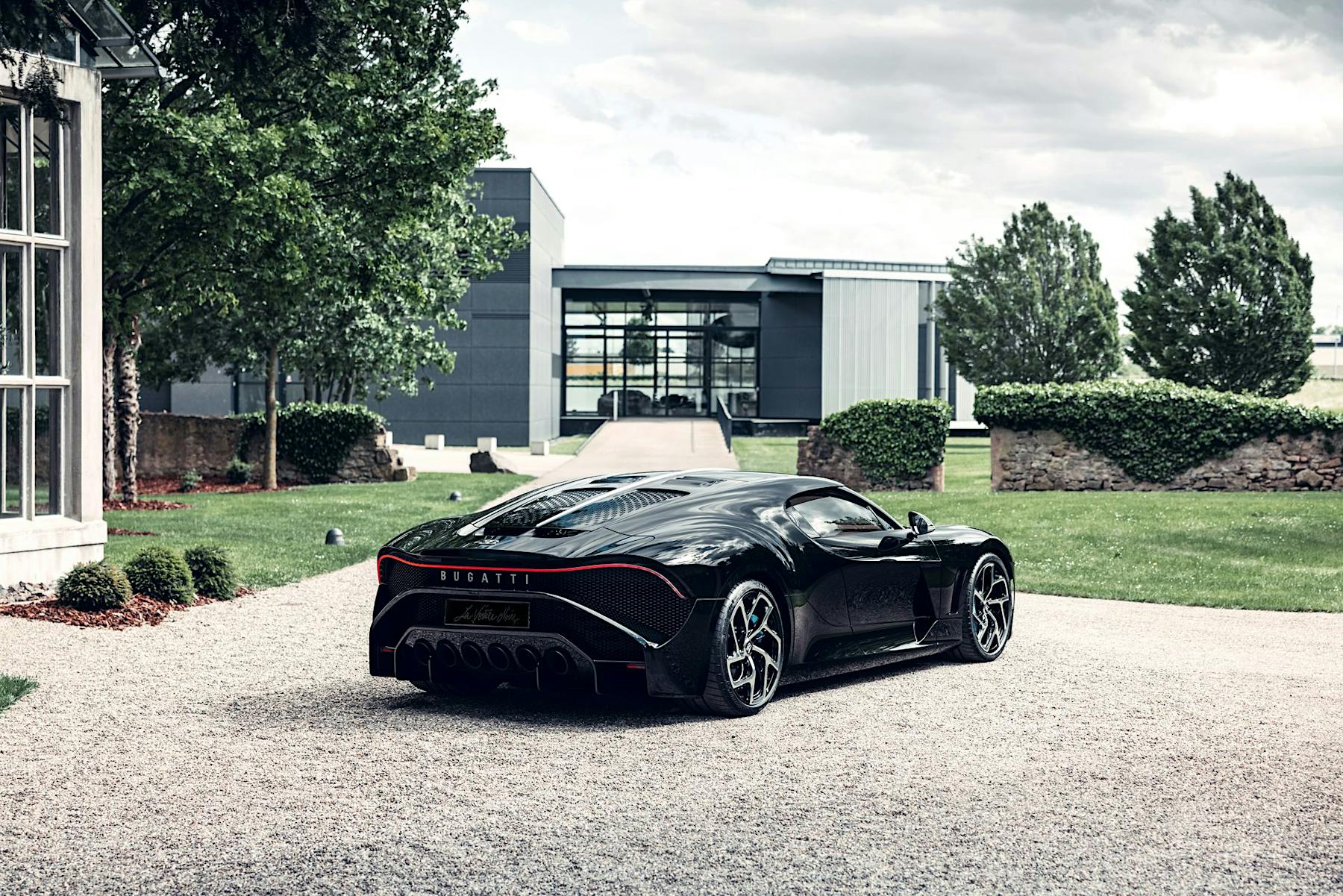
What It Is
La Voiture Noire means "the black car." Bugatti unveiled the project at the 2019 Geneva Motor Show during the brand's 110th anniversary year, then presented the finished car in 2021 after more than two years of development.
It is a one-off coupe built for a private customer. Underneath the sculptural body is the familiar Bugatti W16 ecosystem: an 8.0-liter quad-turbocharged sixteen-cylinder engine rated at 1,500 PS and 1,600 Nm. In plain English, it has the same brutal power family as the Chiron, but the message is different.
Where the Chiron looks technical and forceful, La Voiture Noire is meant to look long, smooth, almost liquid. Bugatti described it as an "automotive haute couture" project, and that phrase actually fits here. The car exists less to chase a lap time than to show what happens when the engineering base of a hypercar is treated as a canvas.
| Detail | Public figure |
|---|---|
| Production | One car |
| Debut | Geneva Motor Show, 2019 |
| Finished car shown | 2021 |
| Engine | 8.0-liter quad-turbo W16 |
| Power | 1,500 PS |
| Torque | 1,600 Nm |
| Reported price | EUR 11 million before tax |
The Atlantic Ghost
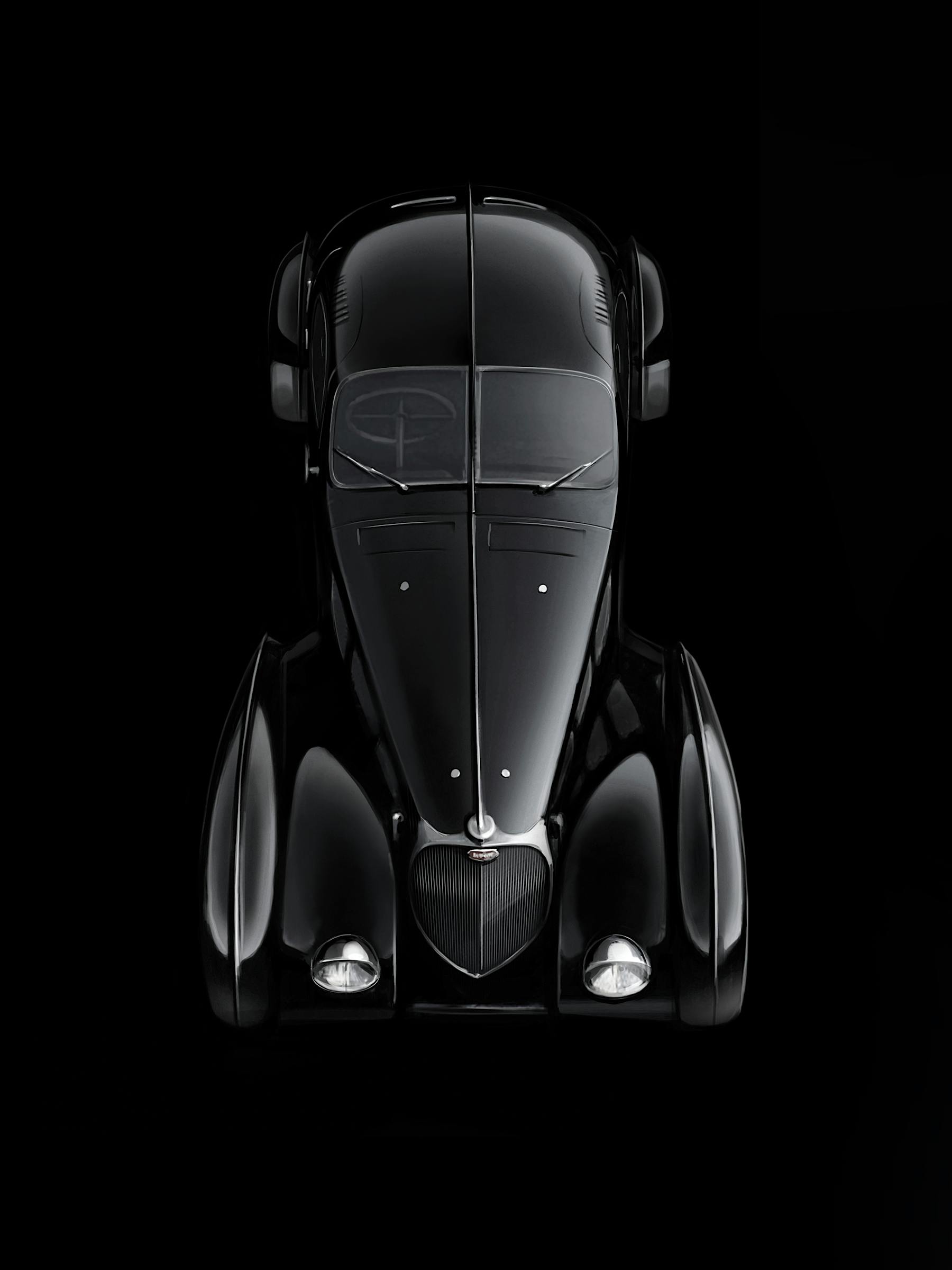
The car's emotional center is Jean Bugatti's Type 57 SC Atlantic, especially the black Atlantic that became known as La Voiture Noire. Only four Atlantics were built in the 1930s. Jean Bugatti's personal black car disappeared before the Second World War and has never been found.
That absence gives the modern car its pull. Bugatti was not just referencing a museum piece. It was referencing a missing object: a car famous partly because it is gone.
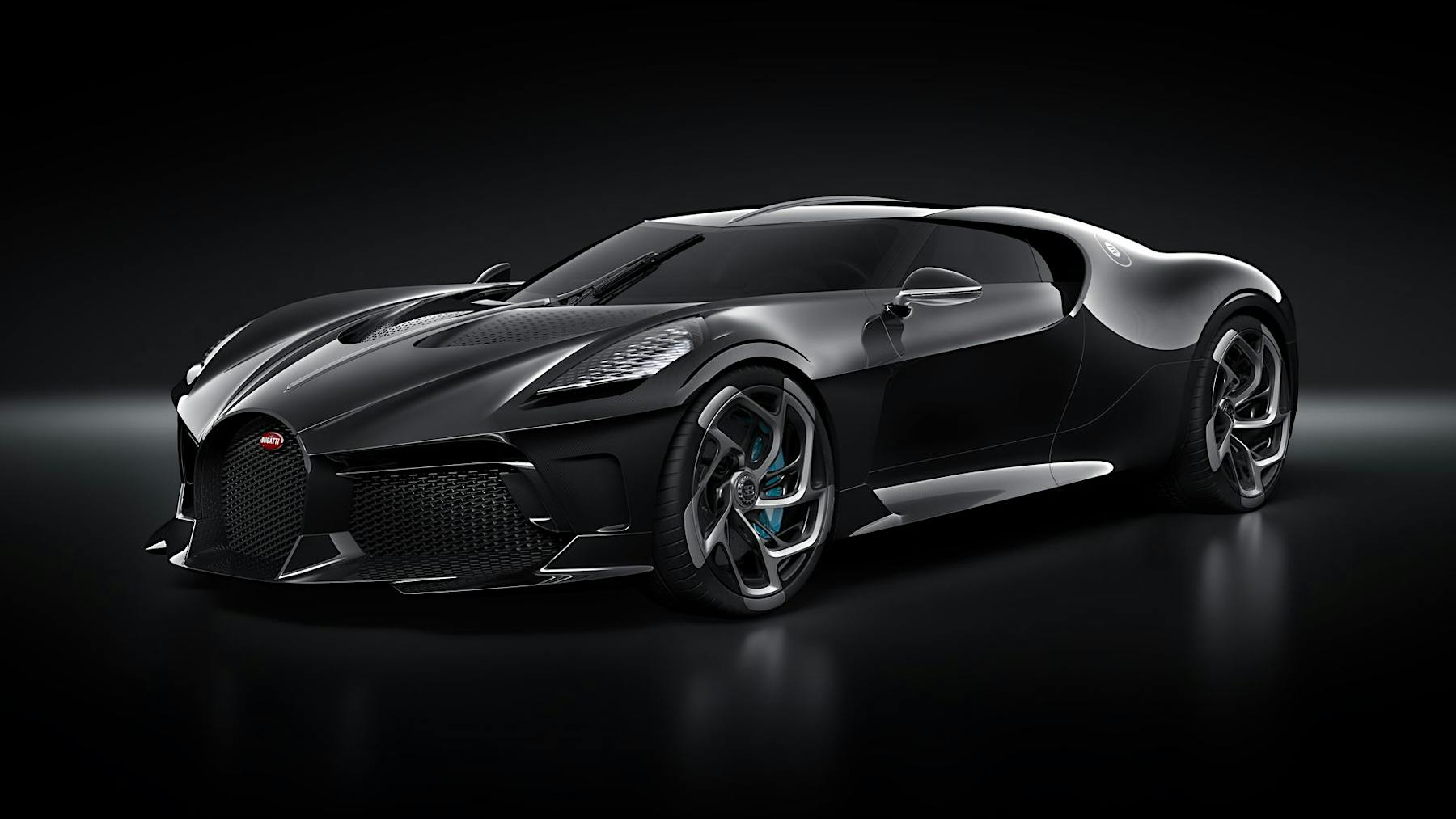
The modern La Voiture Noire uses the Atlantic idea without copying it literally. Photo: Bugatti Newsroom
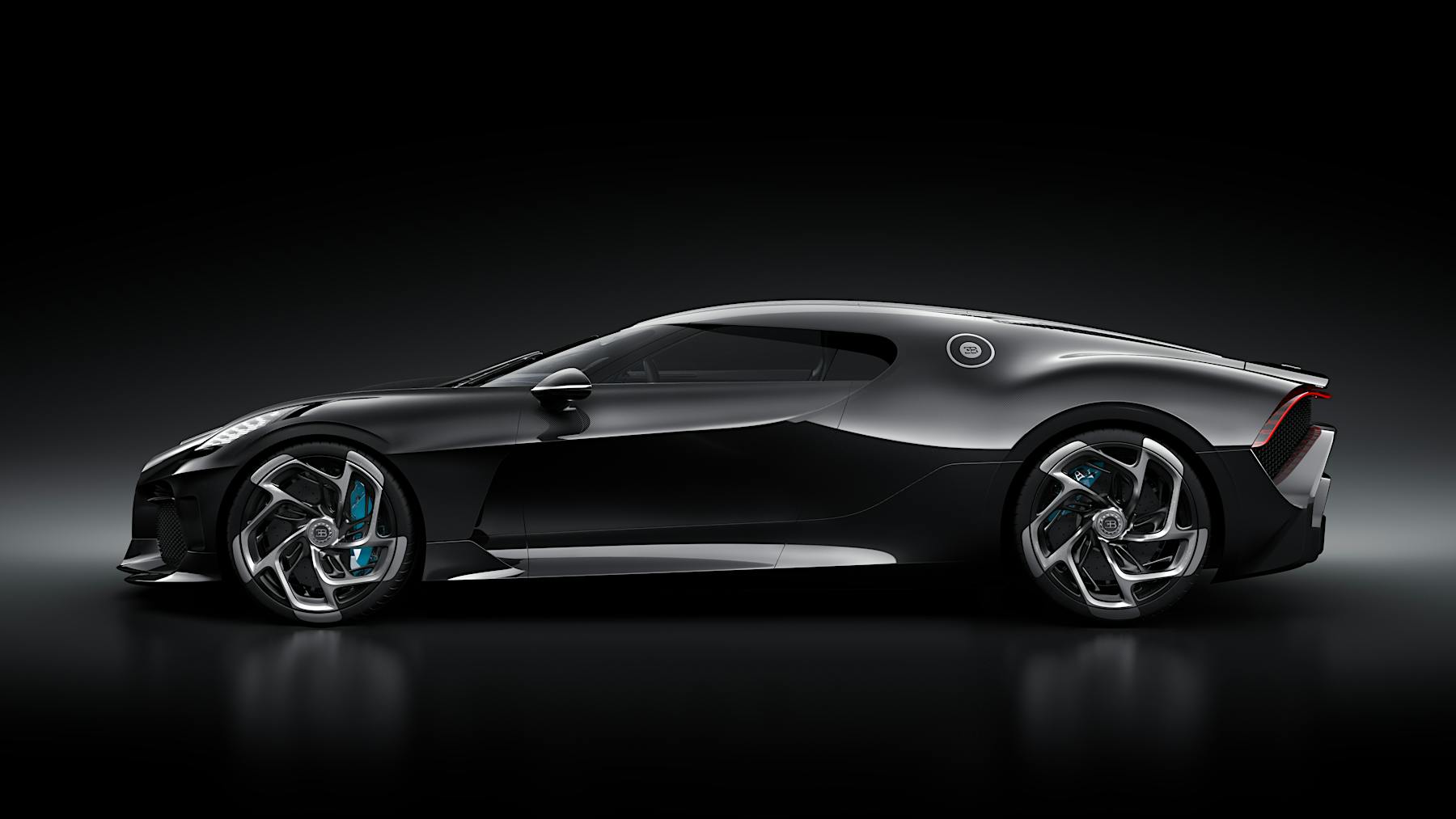
The side view stretches the Chiron formula into a cleaner grand-touring silhouette. Photo: Bugatti Newsroom
The Type 57 SC Atlantic reference behind the modern one-off. Photo: Bugatti Newsroom
The historical Atlantic had a distinctive central dorsal seam because of the construction methods used at the time. The 2019 car translates that memory into a central line running over the modern body. It does not try to become retro. It takes the Atlantic's ideas of length, darkness, sculpture and rarity, then rebuilds them through contemporary carbon fiber.
That is why the car works better when viewed as a design argument than as a specification sheet. The old Atlantic was not famous because it was merely fast. It was famous because it looked inevitable and impossible at the same time.
Why The Shape Matters
La Voiture Noire has a cleaner, more restrained body than most modern hypercars. The front is low and wide, the glasshouse is visually fused into the side windows, and the rear avoids the layered aggression common in track-focused machines.
The most theatrical detail is at the back: six exhaust pipes arranged across a broad rear volume. On paper that could sound excessive. Visually, it works because the rest of the body is so calm. The exhausts become a signature instead of clutter.
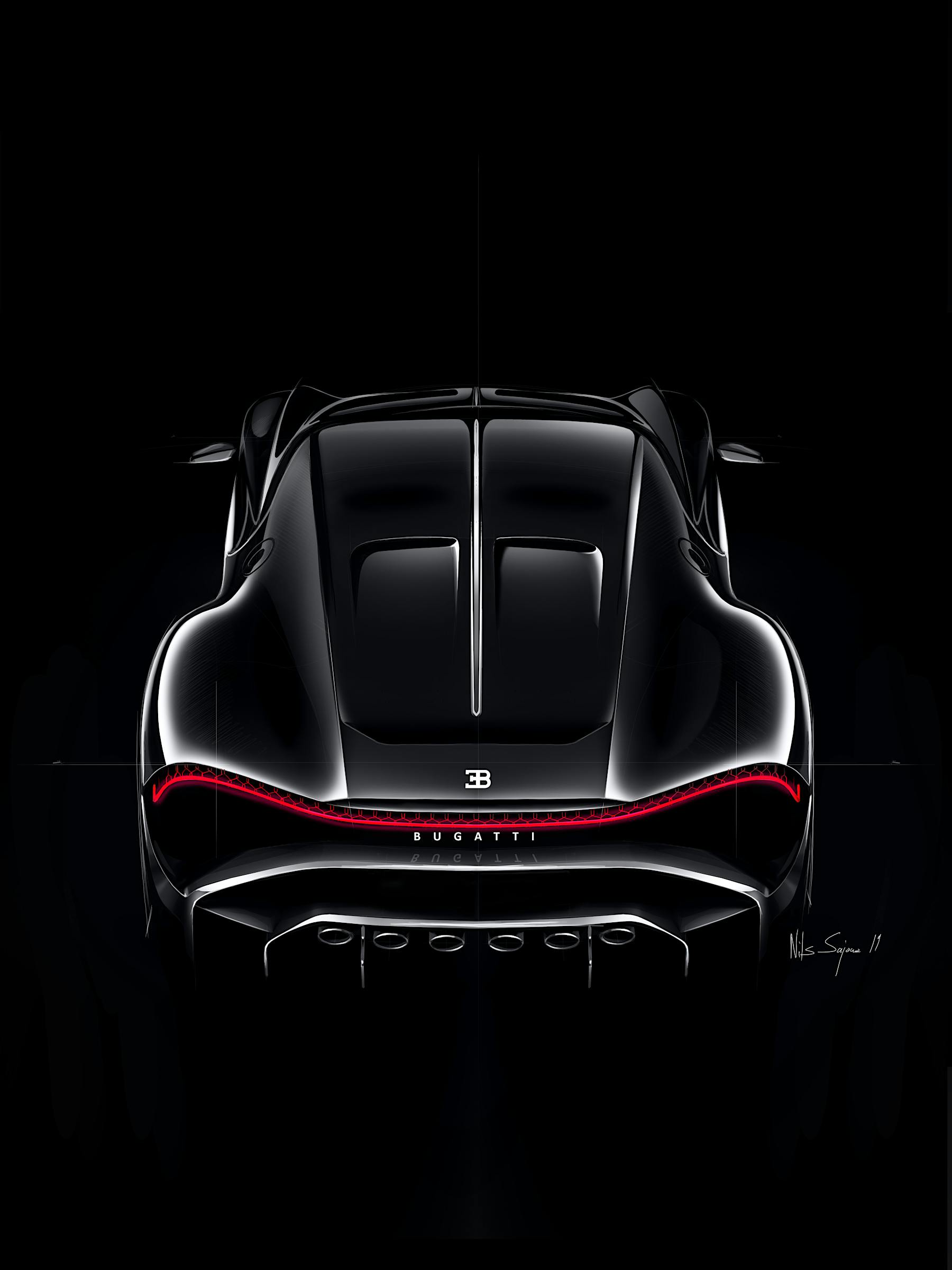
The design also changes the mood of the Chiron formula. A Chiron says speed first. La Voiture Noire says presence first. The power is still there, but the body language is closer to an ultra-expensive grand tourer than a track weapon.
That distinction matters because Bugatti had already used the Chiron platform for several sharply different ideas: the Divo leaned into handling, the Centodieci into EB110 nostalgia, and the Super Sport into high-speed stability. La Voiture Noire sits in another lane: less motorsport, more private commission.
The Price Was Part Of The Product
Bugatti said the price was EUR 11 million before tax. Reporting at the time widely framed it as about EUR 16.7 million after tax, making it the most expensive new car sold at that moment.
That price bought scarcity, but not only scarcity. It bought the right to shape a car with the manufacturer, the engineering work needed to make a new body function around the W16 package, and the cultural charge of owning a one-off tied to one of Bugatti's most valuable stories.
The owner has never been officially named by Bugatti. That privacy is part of the mythology, but it is also a reason to avoid confident claims about who bought it. The reliable fact is simpler: it was commissioned, sold, developed, and finished as a single-client car.
Why It Still Feels Modern
Many tribute cars age quickly because they lean too hard on nostalgia. La Voiture Noire avoids that by keeping the historical references structural rather than decorative.
The black carbon body is not covered in fake 1930s details. The Atlantic reference appears in proportion, the central spine, the clean surfacing and the idea of an impossibly rare black coupe. The result is still recognizably a twenty-first-century Bugatti.
That balance is hard. Too much pastiche and the car becomes costume. Too much Chiron and the name becomes marketing. La Voiture Noire lands between those extremes: familiar enough to belong to Bugatti history, strange enough to justify being alone.
The Real Legacy
La Voiture Noire helped mark a return to ultra-bespoke Bugatti coachbuilding in the modern era. Later one-off and few-off projects made the strategy clearer: for the richest clients, the car is not just a machine, but a private artifact built from brand history.
For everyone else, La Voiture Noire is useful because it explains what Bugatti thinks its highest-value product really is. Not acceleration. Not even top speed. Those are expected. The rarest thing Bugatti can sell is a story that no other owner can repeat.
Sources
- Bugatti Newsroom: La Voiture Noire, a one-off car for the anniversary for the 2019 debut, price, W16 figures, anniversary context and Atlantic references.
- Bugatti Newsroom: La Voiture Noire, from a vision to a reality for the finished 2021 car, development timeline and design description.
- Bugatti: La Voiture Noire model page for the official current model description.
- Top Gear: La Voiture Noire is the most expensive new car ever built for independent context on the Chiron basis and Geneva reveal.
- Classic Driver: Bugatti's La Voiture Noire is the most expensive new car ever built for independent reporting on the after-tax price framing.
Photo Credits
- La Voiture Noire finished car, Bugatti Newsroom.
- La Voiture Noire front, side and rear press images, Bugatti Newsroom.
- Type 57 SC Atlantic reference image, Bugatti Newsroom.